Before hiring an interior designer in Pakistan, most people want the same handful of things cleared up first — how a designer is different from an architect, what “turnkey” actually means, what to ask before signing anything, and what’s actually included in a commercial fit-out like a salon. Here’s a straight answer to each, without the sales pitch.
I get some version of these four questions in almost every first call, whether it’s a homeowner or a business owner planning a fit-out. So instead of answering them one at a time over and over, here they are together, in plain language.
What’s the Difference Between an Interior Designer and an Architect?
Key takeaway: An architect handles a building’s structure — walls, load-bearing elements, permits, and new construction. An interior designer works within that structure, focusing on layout, materials, furniture, and finishes. Many projects need both; some need only one.
Think of it this way: if you’re knocking down walls, adding a floor, or building from an empty plot, you need an architect involved, full stop. If the structure’s already there and you’re changing how the space looks and functions — new flooring, a redesigned layout within existing walls, furniture, lighting, finishes — that’s interior design territory.
Where it gets confusing is that a lot of commercial fit-outs need both at once. A salon or office renovation might need minor structural changes alongside a full interior redesign. That’s why some studios, ours included, handle architecture and interior design under one roof — it avoids the back-and-forth between two separate firms who aren’t talking to each other.
What Does “Turnkey” Interior Design Actually Mean?
Key takeaway: Turnkey interior design means one team handles everything from concept and 3D design through to construction and final handover — you get a finished, ready-to-use space without coordinating separate designers, contractors, and vendors yourself.
The term gets thrown around a lot, so here’s what it actually means in practice. Non-turnkey design usually looks like this: you hire a designer for the concept, then separately find a contractor to build it, then chase down vendors for furniture and fixtures yourself. Every handoff between those parties is a place where things slow down, get miscommunicated, or quietly cost more than planned.
Turnkey flips that. One team designs it, builds it, sources the materials, and hands you the keys to a finished space. You’re not the project manager stitching different vendors together — that’s the whole point of paying for it. It’s especially worth asking about for commercial projects, where delays directly cost you operating days.
What Should I Ask an Interior Designer Before Hiring Them?
Key takeaway: Before hiring an interior designer in Pakistan, ask to see completed real projects (not just renders), confirm whether they offer turnkey execution, get clarity on what’s included in their quote, and check their experience with your specific project type.
A good first meeting should answer more than “do I like their style.” Here’s what’s actually worth asking:
“Can I see finished projects, not just 3D renders?”
Renders show intent. Photos of a completed, handed-over space show they can actually execute.
“Is this turnkey, or will I need to manage a separate contractor?”
Get this straight early — it changes your entire experience of the project.
“What exactly is included in this quote?”
Materials, labor, furniture, fixtures — ask what’s bundled in and what’s billed separately later.
“Have you done a project like mine before?”
A residential specialist and a commercial fit-out specialist bring different instincts to the table. Match the experience to your project.
“What’s the realistic timeline, and what could push it?”
Anyone who gives you a suspiciously tight timeline with no caveats is either overconfident or not being straight with you
None of these questions are awkward to ask. Any designer worth hiring will answer them without getting defensive.
What’s Included in a Salon or Commercial Interior Design Project?
Key takeaway: A commercial interior design project — like a salon, office, or restaurant — typically includes space planning, custom fixtures, lighting design, material selection, and full turnkey construction, all planned around how customers and staff actually move through the space.
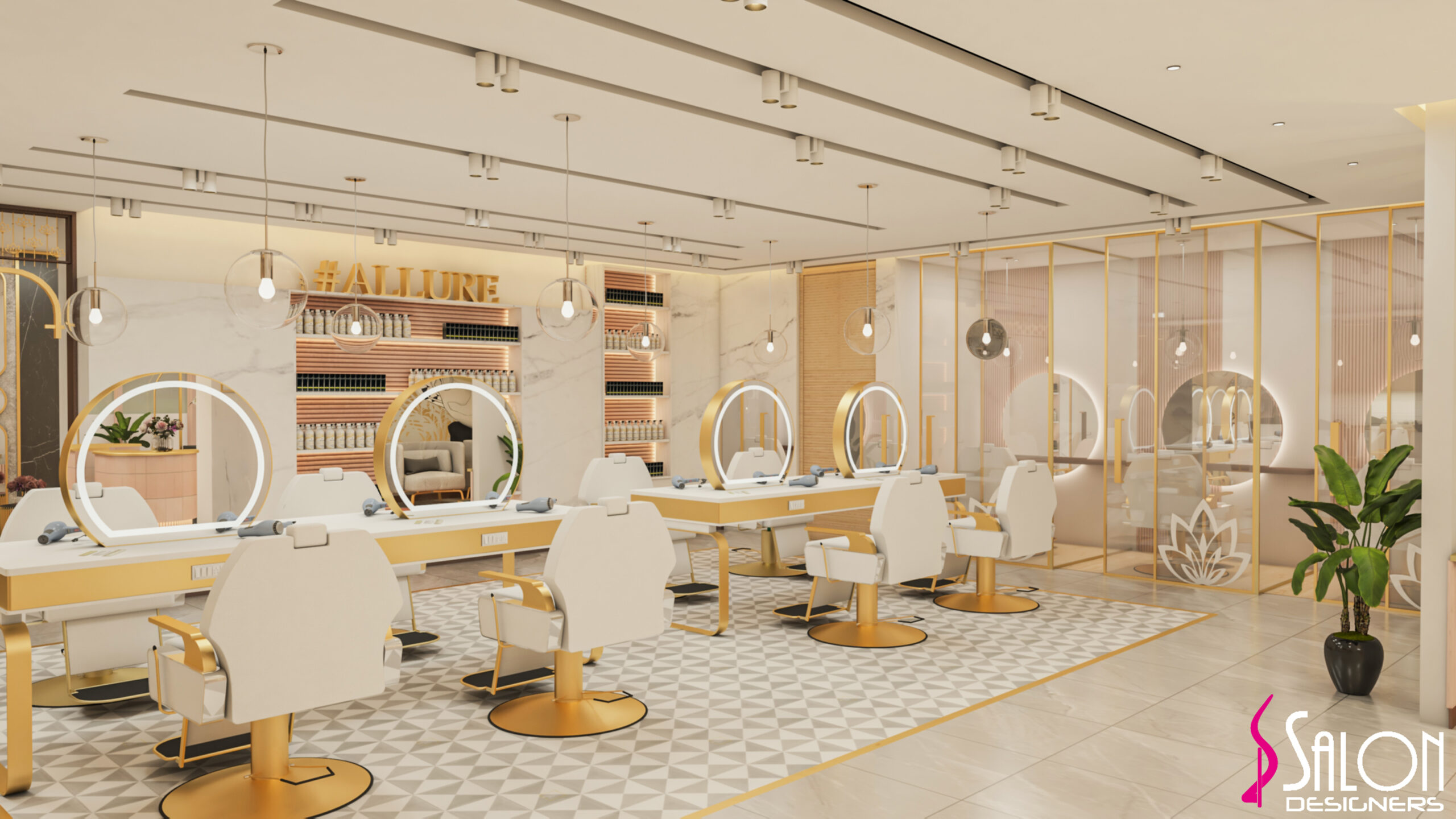
Commercial fit-outs get judged on a different standard than a home. It’s not just how a space looks — it’s whether it actually functions for the people using it every day. For a salon specifically, that usually covers:
- Space planning for reception, styling stations, and back-of-house workflow
- Custom fixtures — styling counters, retail display shelving, wash stations
- Lighting design tuned for both client comfort and how the space photographs
- Material selection that holds up to daily foot traffic and product spills, not just first-week polish
- Turnkey execution, so design and construction stay under one accountable team rather than juggling separate vendors mid-renovation
The same logic applies to offices and restaurants — the specifics change, but the underlying approach (plan the workflow first, then design around it) doesn’t.
Frequently Asked Questions
What’s the main difference between an interior designer and an architect?
An architect handles structural work — walls, permits, new construction. An interior designer works within an existing structure, focusing on layout, materials, and finishes. Many commercial projects need both.
What does “turnkey” mean in interior design?
Turnkey means one team handles design, sourcing, and construction from concept to handover, so you’re not coordinating separate designers, contractors, and vendors yourself.
What should I ask an interior designer before hiring them?
Ask to see completed real projects (not just renders), confirm if they offer turnkey execution, get a clear breakdown of what’s in the quote, and check their experience with your specific project type.
What’s included in a commercial interior design project?
Space planning, custom fixtures, lighting design, material selection, and turnkey construction — all planned around how staff and customers actually use the space.
How much does hiring an interior designer in Pakistan cost?
It depends on city, space size, and finish level, and whether construction is bundled with design. Most studios, including ours, discuss costs after an initial consultation once scope is clear.
Still Have Questions?
These four come up constantly, but every project has its own wrinkles that a blog post can’t fully cover. If you’re planning a home renovation or a commercial fit-out in Islamabad, Rawalpindi, or Lahore, take a look at our completed projects, or book a free consultation and ask us directly — that’s genuinely the fastest way to get a straight answer.