March 23, 2026/
7 Comments
You spend more time in your office than almost anywhere else. Your clients judge you the second they step through...

If you’ve walked into a newly renovated home or salon in Pakistan lately, you’ve probably noticed something different. It’s warmer. Softer. Less showroom, more lived-in. The latest interior design trends in Pakistan for 2026 lean into that shift — minimalism that feels cozy instead of cold, greenery brought indoors, smarter lighting, and a real return to local craftsmanship. Homeowners in Islamabad and Lahore aren’t just chasing style anymore. They want spaces that actually work for how they live.
I’ve been designing interiors across Pakistan long enough to watch these shifts happen in real time, not in a trend report. A decade ago, most briefs I got wanted something that looked imported — glossy, catalog-perfect, a bit disconnected from the house it sat in. That’s changed. Clients now ask for things that make sense here: this climate, these materials, this way of living. Whether you’re renovating a home or fitting out a business, it helps to understand where things are actually heading before you commit to anything.
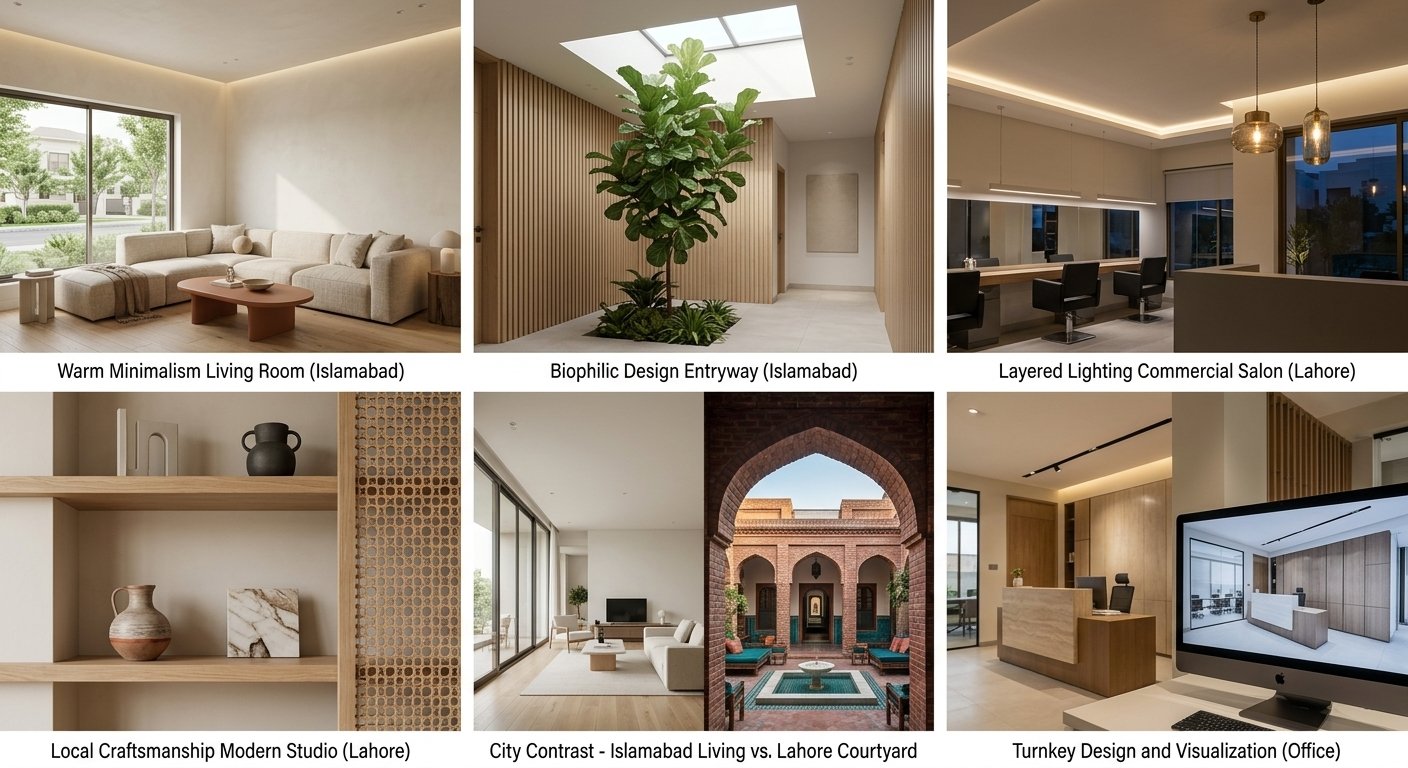
Key takeaway: The top interior design trends for Pakistani homes right now center on warm minimalism, biophilic design, layered lighting, and multifunctional layouts — a move away from decoration for its own sake, toward spaces built around comfort and how a family actually uses each room.
Clean lines are still the goal. Clutter is still the enemy. But nobody wants the stark, all-white showroom look anymore — that had its moment a few years back and it’s fading fast. What’s replaced it is something softer: matte finishes, warm ambient lighting, textures you actually want to touch.
You’ll see it most in living rooms and bedrooms these days. Earthy neutrals instead of hospital-white walls. Linen and boucle instead of anything glossy or hard-edged. It’s minimalism, but it doesn’t feel empty.
Plants aren’t an afterthought anymore — they’re part of the plan from day one. Wood-slat feature walls, natural light pulled in wherever the site allows, greenery woven right into the layout instead of added later as decoration.
There’s a practical side to this too, especially here. Pakistan’s summers are long and unforgiving in most cities, and biophilic touches genuinely cool a space visually — they take some of the visual heat off, if that makes sense, and cut down how much you lean on artificial light during the day.
Flat overhead lighting is on its way out. What’s replacing it is layered lighting — ambient, task, and accent, each doing a different job instead of one bulb trying to do everything. Statement pendant fixtures have become focal points in their own right, not just something to see by.
Smart lighting is also picking up pace, particularly in upper-mid and luxury homes — dimmable, app-controlled, sometimes motion-based. Part of that is style. A bigger part, honestly, is people trying to manage energy costs given what electricity bills look like these days.
Here’s a trend I genuinely enjoy watching unfold: clients no longer feel like they have to pick between “traditional” and “modern.” They want both. Hand-finished woodwork, marble sourced locally, cultural motifs worked into an otherwise clean, contemporary layout.
The result feels like it belongs somewhere specific — not a template you could drop into any city in the world.
Key takeaway: An interior designer in Islamabad usually works with more contemporary, structured layouts suited to newer housing sectors and corporate clients, while an interior designer in Lahore often has to balance modern design with the city’s much older architectural character.
City context shapes a lot more than people realize going in. Islamabad’s newer sectors, wider plots, and greener streets tend to pull design toward clean, contemporary layouts — open-plan living, lots of natural light, a fairly planned and modern feel overall, because the city itself is planned that way.
Lahore is a different animal. It’s older, denser, and carries centuries of architectural history in its bones. An interior designer in Lahore is frequently working inside older construction, and clients there often want something modern that still nods to the city’s Mughal and colonial past — an arched doorway here, a jaali-inspired screen there, richer, deeper colors than you’d typically see in an Islamabad project.
This matters more than people think if you’re running a business, too. A salon or office fit-out that feels current in Islamabad might need different materials or colors to land the same way in Lahore. Any interior designer in Pakistan who works across cities should be able to tell you why, not just nod along.
Key takeaway: Traditional Pakistani interiors lean on ornate detailing, rich colors, and heavy wood furniture, while modern interiors favor clean lines and neutral palettes — though the real story in 2026 is how many spaces are blending both instead of picking a side.
| Element | Traditional Pakistani Style | Modern Pakistani Style (2026) |
|---|---|---|
| Color Palette | Deep reds, golds, jewel tones | Beige, olive, terracotta, soft greys |
| Furniture | Heavy, ornately carved wood | Sleek, curved, minimal ornamentation |
| Wall Treatment | Bold wallpaper, elaborate mouldings | Textured plaster, matte paint, feature walls |
| Lighting | Chandeliers, single-source ceiling lights | Layered ambient, task, and accent lighting |
| Materials | Marble, brass, dark polished wood | Matte stone, natural wood, woven textiles |
| Layout | Formal, room-by-room separation | Open-plan, multifunctional zones |
Honestly, most of the homes and businesses I walk into don’t sit neatly in one column. The best interiors I’ve seen borrow the structure and practicality of modern design but keep a few traditional touches — a carved detail here, a specific material there — that give the space some personality instead of looking like it could be anywhere.
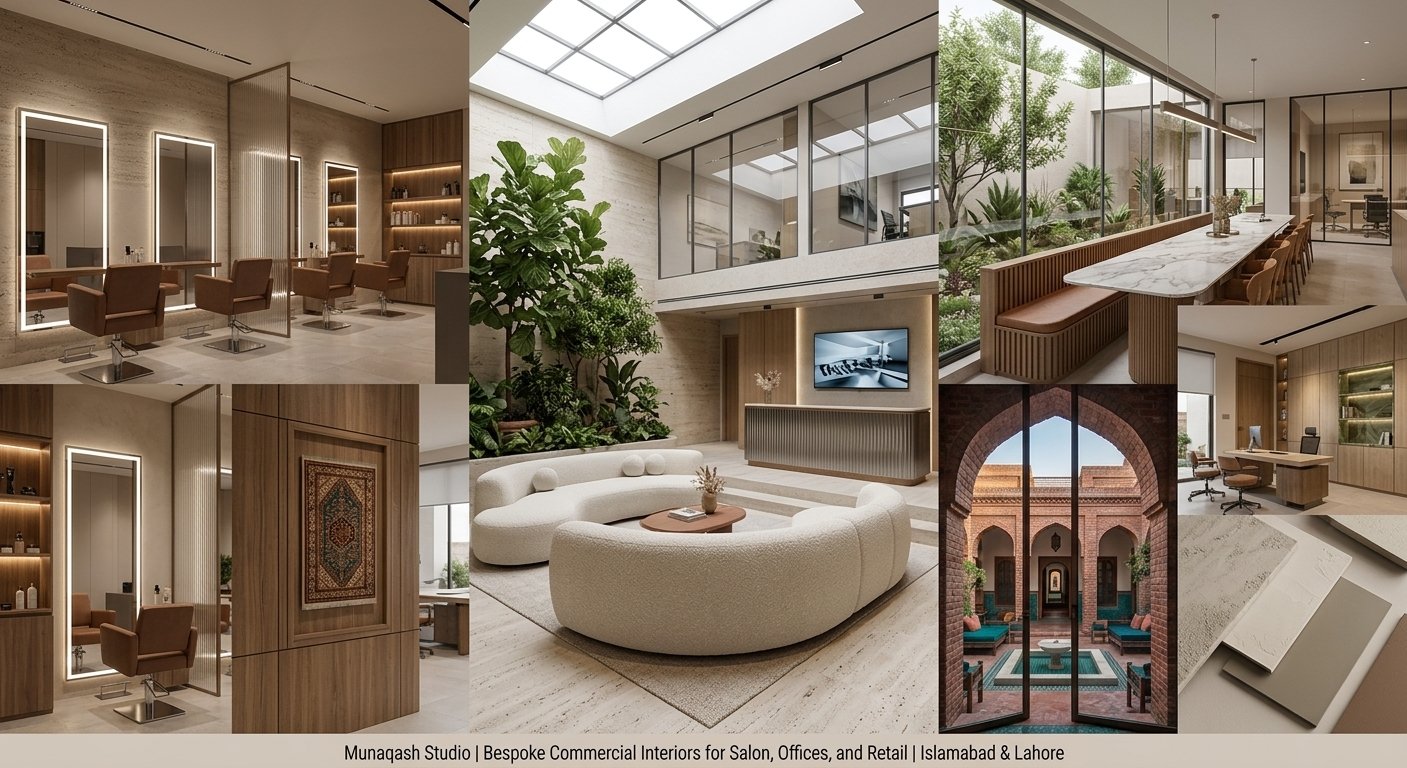
Key takeaway: Choosing the right interior designer in Pakistan comes down to checking real completed projects rather than just renders, confirming they can actually execute turnkey work, and making sure their past projects match yours — home, salon, office, or restaurant.
Scrolling through Instagram portfolios only tells you so much. Here’s what I’d actually tell a friend to check before hiring anyone:
How much does interior design cost in Pakistan?
It genuinely depends — city, space size, material quality, and whether construction or fit-out work is bundled in with the design all move the number. Most studios, including ours, prefer to talk costs after an initial consultation once scope and finish level are actually clear.
What is the most popular interior design style in Pakistan right now?
Warm minimalism, hands down. Clean, clutter-free spaces paired with earthy tones, natural textures, and proper layered lighting — that’s what most clients are asking for right now, whether it’s a home or a commercial space.
How long does a typical interior design project take in Pakistan?
It ranges a lot. A single room might take a few weeks from concept to handover. A full home or commercial fit-out involving actual construction can stretch into a few months. Scope drives the timeline more than anything else.
Do I need both an architect and an interior designer in Pakistan?
Not always. If the structure’s already there and you’re not changing walls or layout, an interior designer alone can usually handle materials, furniture, and finishes. You’ll need an architect once structural changes, extensions, or new construction come into play — some studios, ours included, handle both under one roof.
Trends are a decent starting point, but the right combination for you depends on your actual space, your budget, and how you’ll really use it — not what’s trending on a feed somewhere. Seeing a trend applied to your own layout, through proper 3D visualization, makes that call a lot easier than working off inspiration photos alone.
Whether you’re renovating a home or planning out a commercial space, working with someone who understands both where design is heading and how to actually execute it locally makes all the difference between a space that photographs well and one that works for you every single day.
Planning something in Islamabad, Rawalpindi, or Lahore? Take a look at our completed projects or book a free consultation with our team.
You spend more time in your office than almost anywhere else. Your clients judge you the second they step through...
Table of Contents Walk into the wrong office and you feel it instantly — something’s off, energy’s flat, and no...
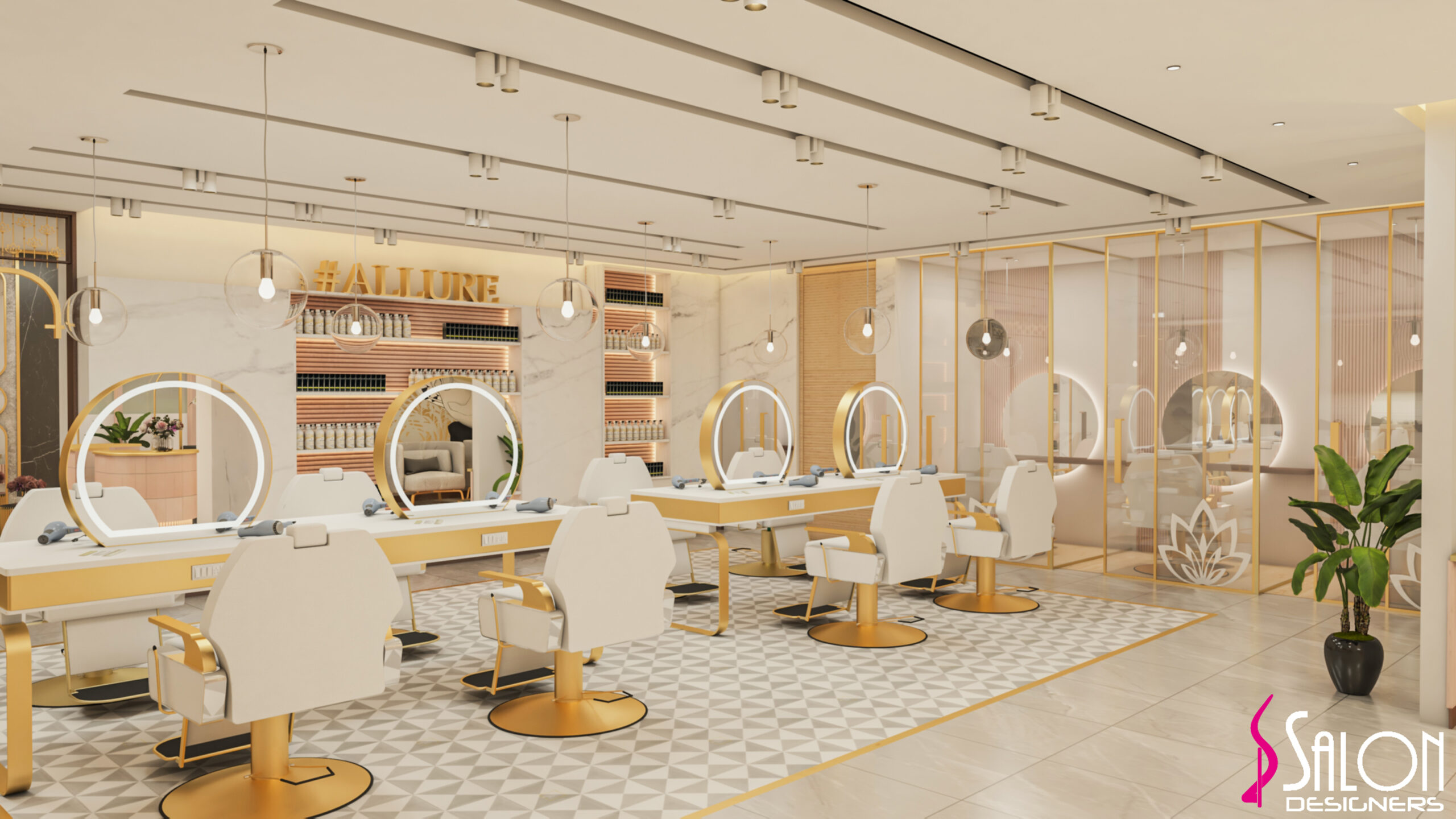
A salon today sells an experience, not just a service. Thoughtful salon interior design builds trust and comfort the moment...
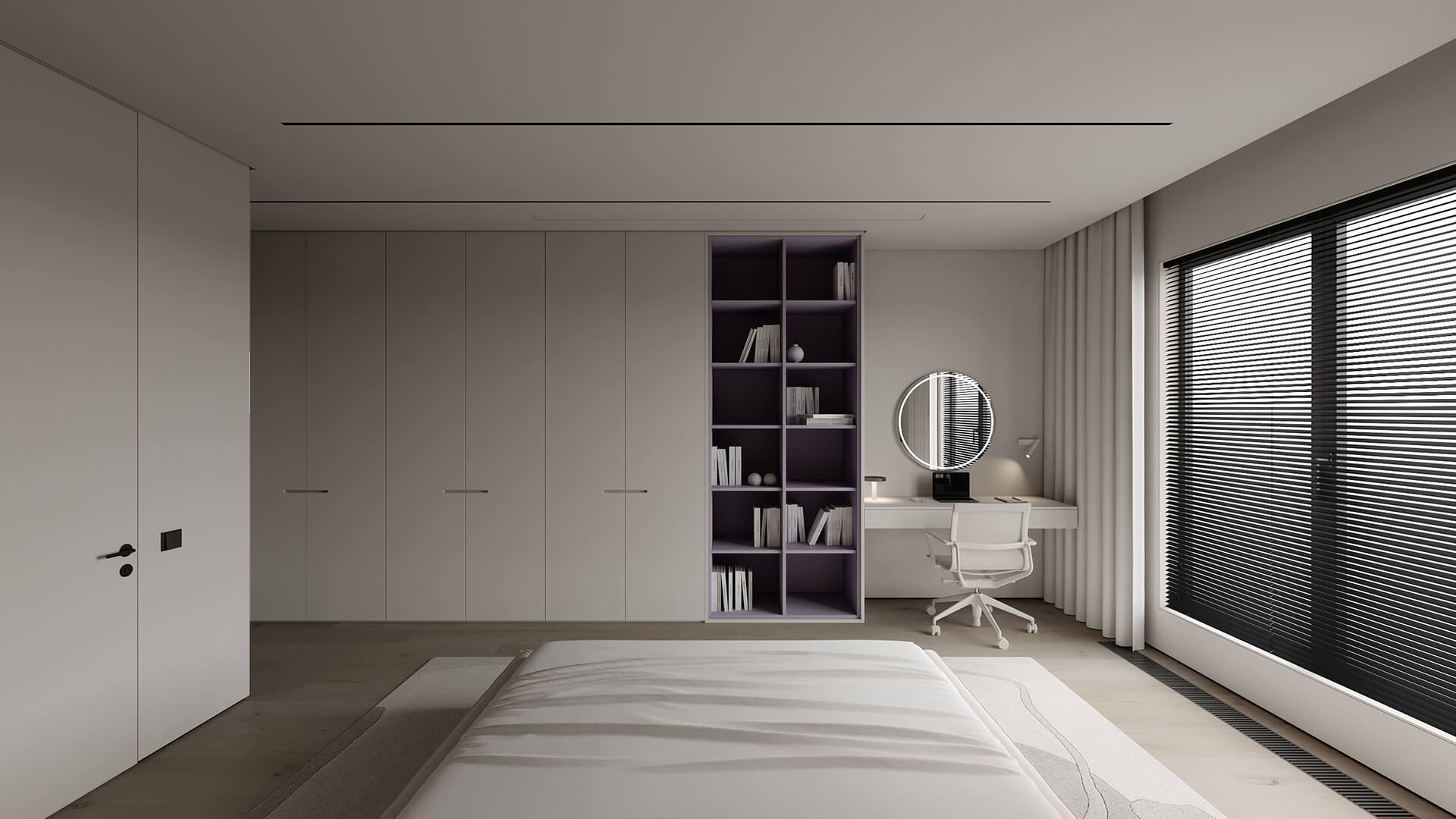
Finding the right interior designer near you starts with knowing what actually matters — not just browsing photos. Professional design...
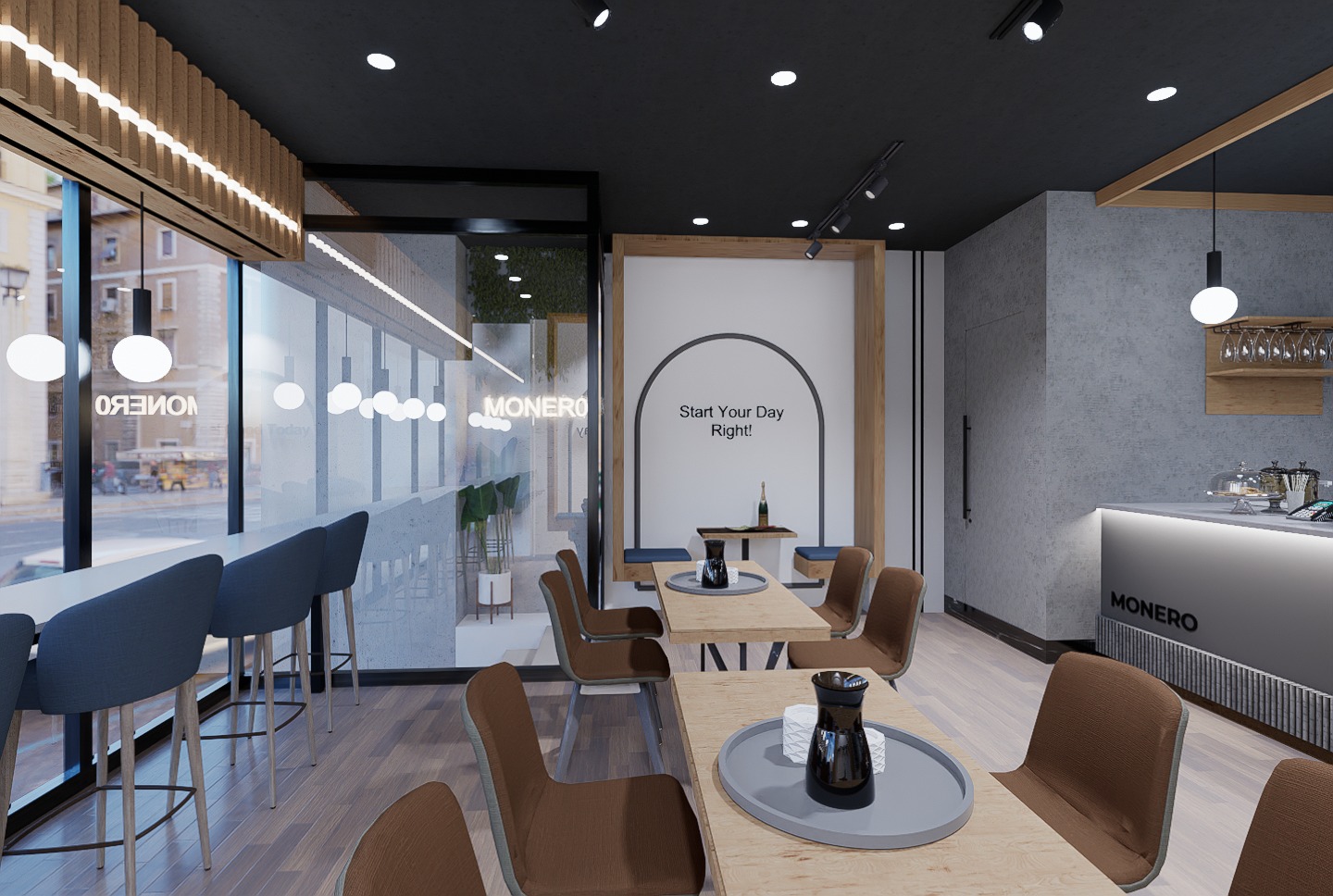
In a competitive food market, the space matters as much as the menu. Good cafe interior design in Pakistan shapes...
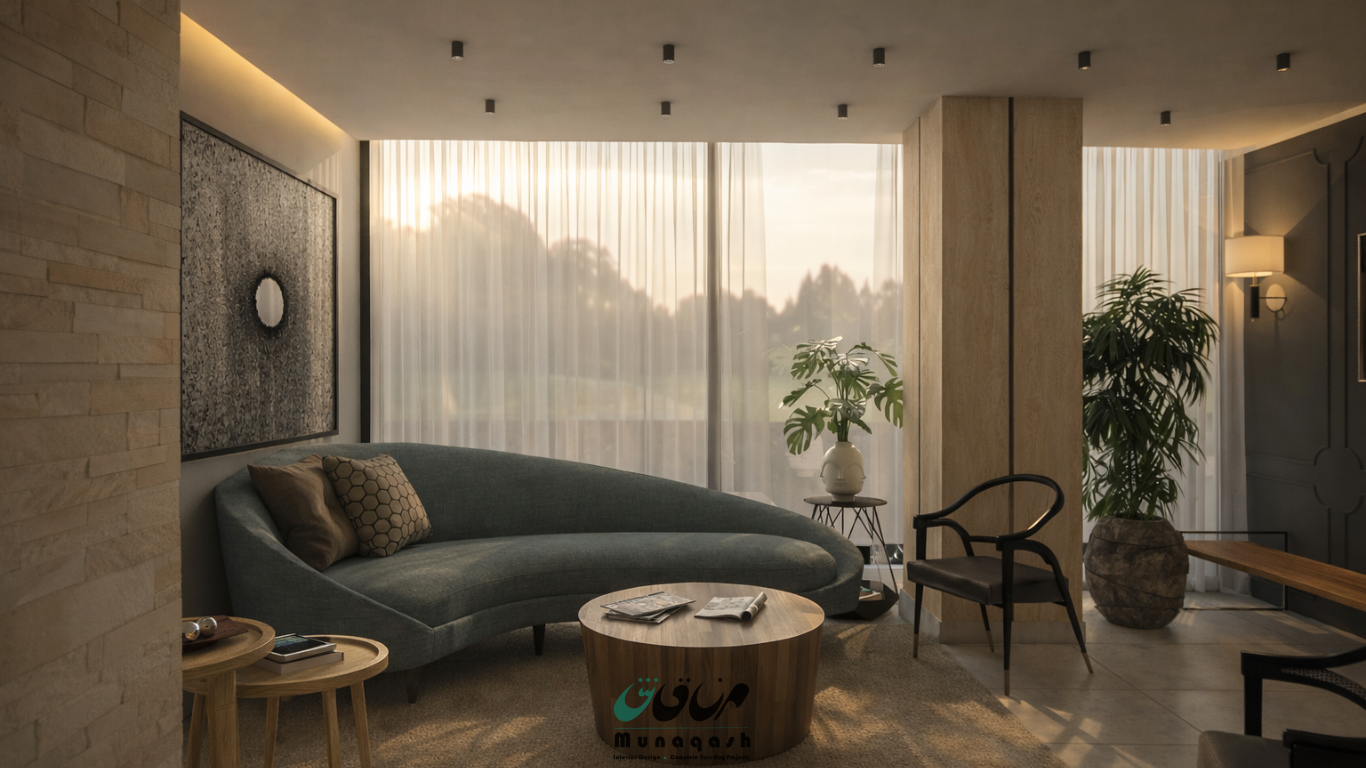
If you’re in Islamabad and thinking about redesigning a space, you’ve probably already searched for interior design companies or an...
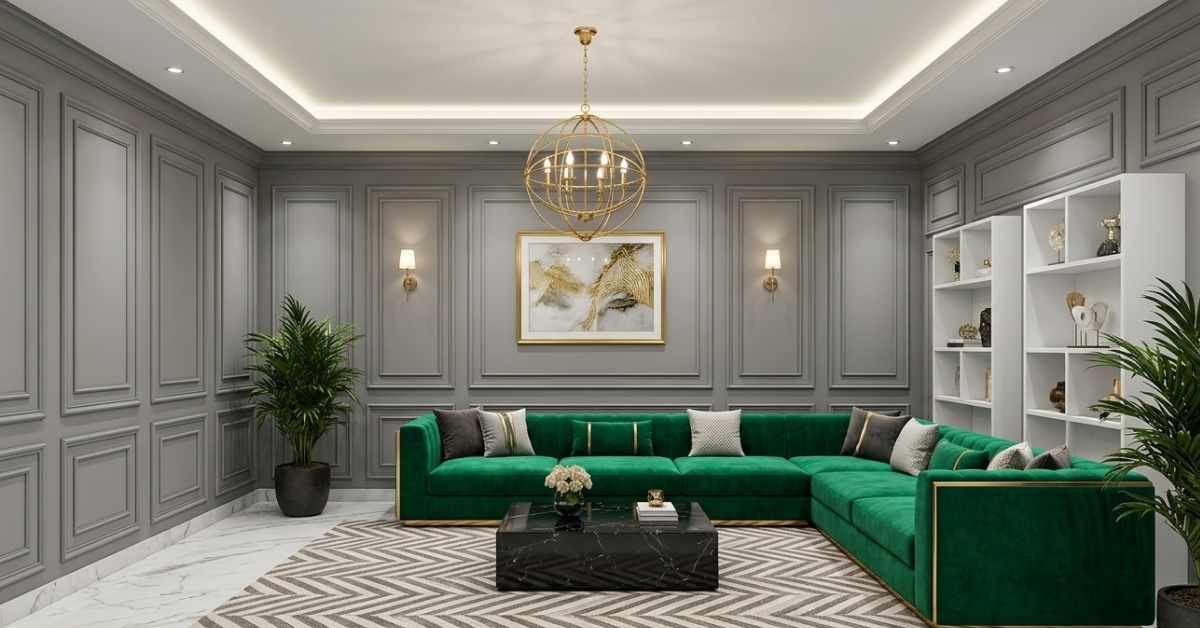
First impressions matter more than ever. Whether someone walks into a restaurant, office, retail outlet, café, or corporate space, the...
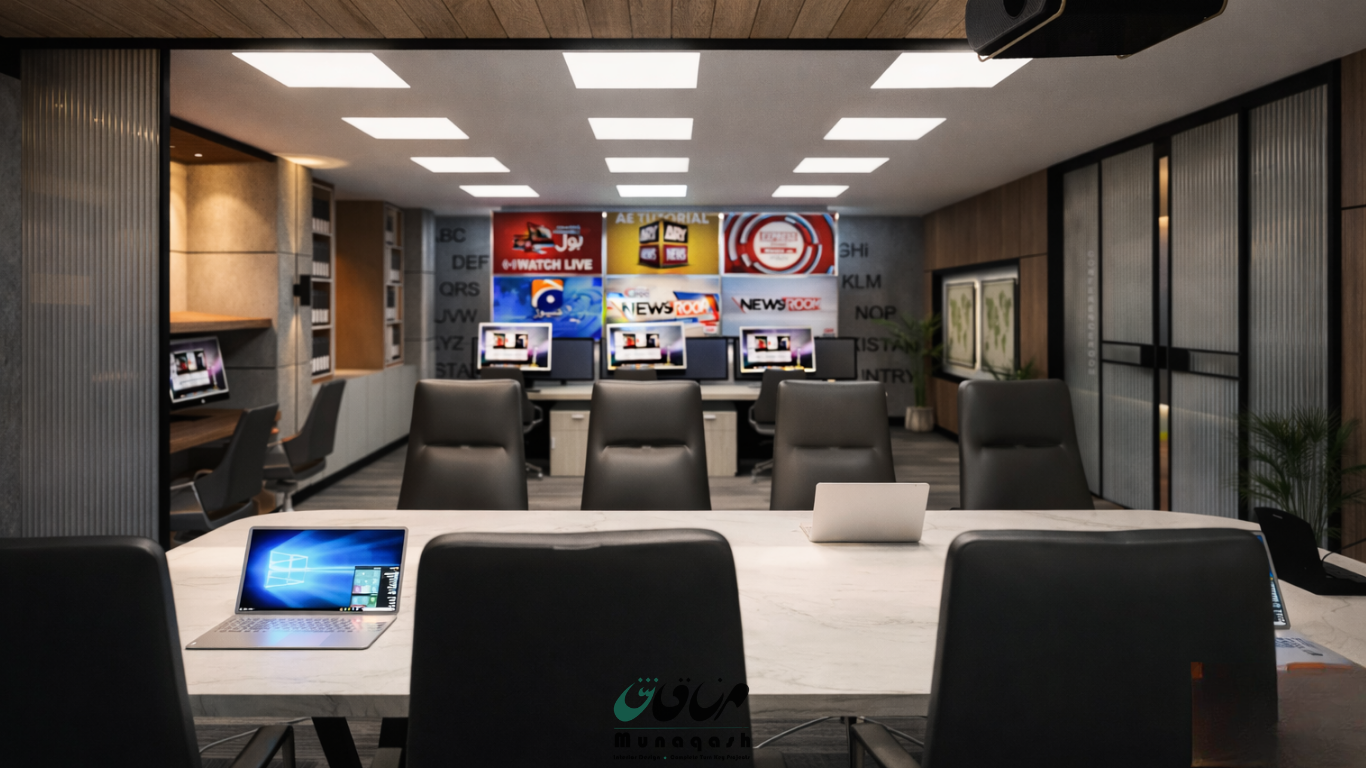
Workspaces are no longer just places where employees sit behind desks for hours. Businesses now understand that office environments directly...
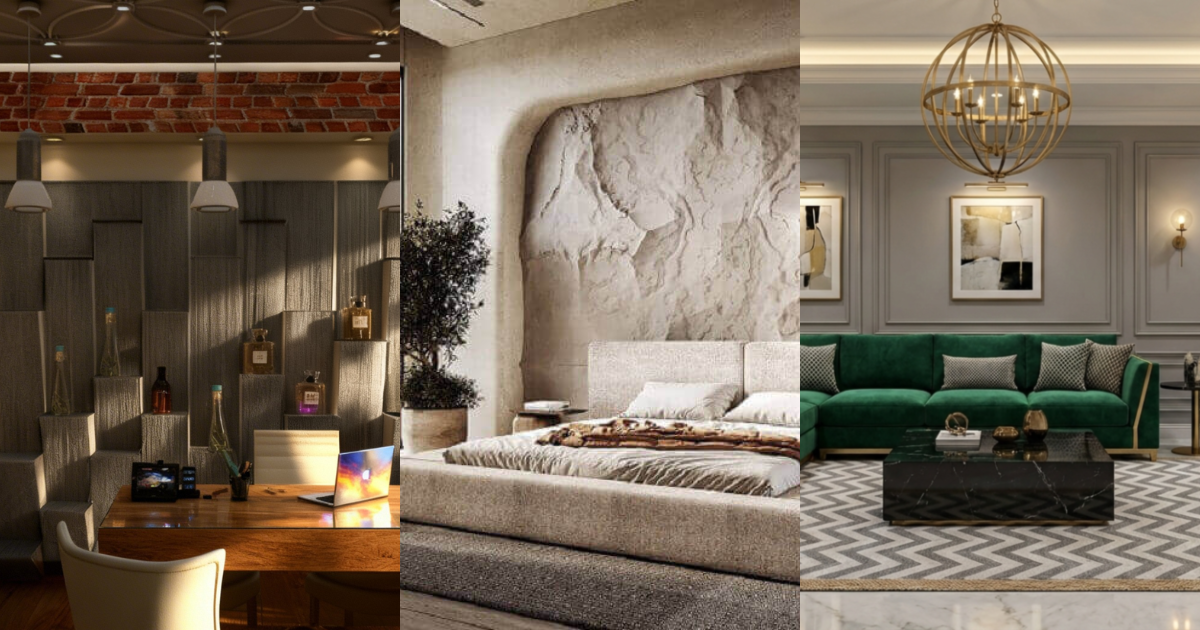
Picking the right interior design style for a commercial space is less about personal taste and more about what the...